| Origins | Late 19th century, continental Europe |
| Challenges | Populism • Polarization • Illiberal forces |
| Global Status | Important political model, but fragile and tenuous history |
| Political System | Liberal democracy |
| Historical Spread | Early 20th century, facing opposition from authoritarianism |
| Coexisting Systems | Other forms of government |
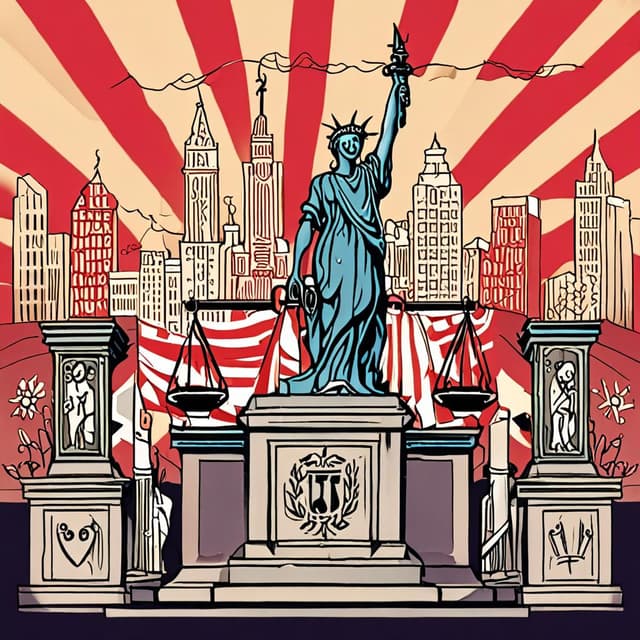
Liberal democracy is a political system that features free and fair elections, a multi-party system, protection of individual civil liberties and political rights, and an economy based on private enterprise and free markets. While the core ideas of liberalism and democracy have ancient roots, the modern liberal democratic model first arose in continental Europe in the late 19th century before gradually spreading across the world in the 20th century.
The foundations of liberal democracy were laid by political philosophers and intellectual movements of the late 1700s and early 1800s, such as John Locke, the French Enlightenment, and the American Revolution. However, it took until the late 19th century for the first stable liberal democratic systems to emerge, primarily in Germany, France, and the Low Countries.
Key early developments included:
These systems were not perfect, as they often had property qualifications that disenfranchised the working class. But they represented a major shift away from absolute monarchy, aristocracy, and authoritarianism toward greater political participation and individual rights.
The early 20th century saw the continued expansion of liberal democracy, both in Europe and across the world. Key developments included:
However, the interwar period also saw the rise of authoritarian ideologies like fascism and communism that posed major challenges to liberal democracy. Intense ideological conflicts between these opposing systems dominated geopolitics throughout the 20th century.
Despite the threats it has faced, liberal democracy has become an increasingly common form of government worldwide over the past century. As of 2022, around 100 countries are considered liberal democracies to varying degrees, home to over 4 billion people.
However, the global position of liberal democracy is more tenuous and precarious than in our timeline. Many countries have experienced periodic backsliding toward authoritarianism, and liberal democratic institutions remain fragile in much of the developing world. Powerful populist and autocratic movements continue to pose serious threats.
Furthermore, liberal democracy coexists with other political models like hybrid regimes, one-party states, and theocracies. No single system has achieved the global dominance that liberal democracy has in our world. The long-term future of this form of government remains uncertain.
Liberal democracies in this timeline face a number of ongoing issues that test their stability and resilience:
These and other factors contribute to a general sense of crisis and uncertainty around the future of liberal democracy in many parts of the world. Its ultimate fate remains an open question.
